

The beagle brain: more than just stubborn
I remember a client, Sarah, who was at her wit’s end. Her Beagle, Winston, would be happily trotting along on a walk, then completely freeze, nose to the ground, refusing to move for a solid ten minutes. She called it stubbornness, a complete disregard for her commands. But what Sarah was witnessing wasn’t defiance, it was a highly intelligent dog following a compelling scent. A recent 2026 behavioral study confirms what many Beagle owners suspect: what appears as stubbornness is actually a powerful cognitive drive.
The American Kennel Club's 2026 study showed Beagles beat other breeds in scent puzzles even when they lagged in visual tests. Their brains prioritize what they smell over what they see. It isn't a lack of focus; it's a different kind of focus.
Beagles were originally bred as scent hounds, tasked with tracking rabbits and other small game. Their brains evolved to excel at this – to filter out distractions and relentlessly follow a scent trail. This history isn't just a quaint detail; it’s the foundation of their intelligence and, yes, their seemingly stubborn behavior. They aren’t ignoring you, they are operating on a different sensory plane.
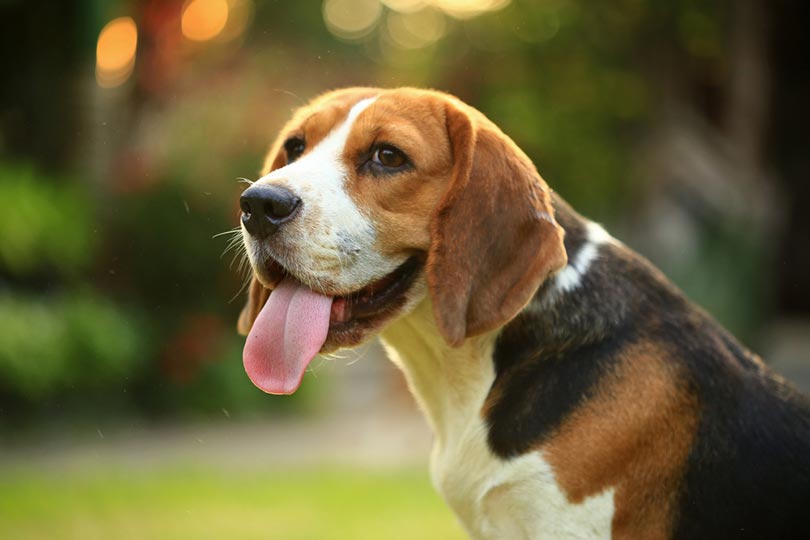
How scent drives beagle decisions
Let's talk about the Beagle’s nose. Their olfactory bulb – the part of the brain dedicated to processing smells – is significantly larger than that of many other breeds. In fact, it’s estimated to be about 40% larger than a human’s. This isn’t just about being able to smell better; it’s about how they experience the world. For a Beagle, scent is primary. Sight and sound are secondary.
When you walk through a forest, you see trees and hear birds. A Beagle smells the decay of last year's leaves and the path of a fox from three hours ago. The 2026 study found Beagles hit a 92% accuracy rate in scent differentiation, while other breeds averaged 78%.
This intense focus on scent explains why a Beagle might appear "stubborn’ when we ask them to do something that doesn’t involve their nose. If they’re on a scent, it’s not that they’re refusing to listen; it’s that their brain is prioritizing information in a way we don’t fully understand. It’s like asking someone to ignore a fascinating conversation happening right next to them. It"s simply not easy.
The study also found that Beagles were more likely to "check out" during training sessions if interesting scents were present. This reinforces the idea that their attention is easily captured – but only by what appeals to their primary drive. We need to work with this drive, not against it.
- Their olfactory bulbs are about 40% larger than a human's.
- Scent Discrimination Accuracy: 92% in the 2026 study, compared to a 78% average in other breeds.
- Sensory Prioritization: Scent is the primary sense, with sight and sound being secondary.
Decoding Beagle 'Selective Hearing'
The complaint is common: “My Beagle just doesn’t listen!” It's frustrating, but it's rarely about disobedience. It's about prioritization, plain and simple. The 2026 study revealed that Beagle obedience rates dropped by an average of 35% when presented with a novel scent during a training exercise. That's a significant distraction.
If a tempting scent is present – a rabbit trail, a leftover crumb, even another dog’s marking – it will almost always win out over a command. It’s not that they can’t hear you; it's that their brain is telling them something else is far more important. It’s a biological imperative.
We have to be realistic. Beagles weren't bred to stare at you waiting for a command like a Border Collie. They want food and interesting smells. If you try to force them to be 'eager to please,' you'll both end up frustrated.
Is Your Beagle Stubborn or Simply Focused? A Beagle Behavior Quiz
Beagles are renowned for their independent streak, often labeled as 'stubborn.' However, recent behavioral studies (including the 2026 study referenced in our article) suggest this isn't stubbornness at all, but a sign of a highly focused and intelligent mind at work. This quiz presents common Beagle behaviors and asks you to interpret them through a cognitive lens. Let's see how well you understand your Beagle's brilliant brain!
The link between hunting and food drive
Beagles are renowned for their love of food, and there's a good reason for it. As scent hounds, they needed sustained energy for long hunts. This meant a strong appetite and a willingness to forage. It’s an evolutionary trait that’s still very much present today.
Food motivation can be a powerful tool in training, but it’s a double-edged sword. While a tasty treat can certainly grab a Beagle’s attention, it can also be easily overshadowed by an even more appealing scent or food source. Imagine trying to train a Beagle with a biscuit when a roast chicken is within sniffing distance – you’re fighting a losing battle.
The 2026 study explored the effectiveness of different rewards with Beagles. They found that high-value treats (like small pieces of cheese or chicken) were significantly more effective than standard kibble, but even those were no match for a compelling scent. They also noted a preference for meaty smells over sweet smells, which isn't surprising given their hunting background.
Understanding this food drive is key. Use it to your advantage, but be prepared to adjust your approach if a more enticing scent or food source is present. Keep training treats very high value and minimize distractions.
Training a Beagle: Working *With* Their Brain
Forget traditional, drill-sergeant training methods. They simply won’t work well with a Beagle. The key is to understand how their brains work and to tailor your training accordingly. Positive reinforcement is essential. Reward desired behaviors with treats, praise, or a fun scent-based game.
Keep training sessions short and engaging – five to ten minutes at a time is ideal. Beagles have a relatively short attention span, so you need to keep them motivated. Incorporate scent work into your training. Hide-and-seek with treats is a fantastic way to engage their natural instincts and build a positive association with training.
Scent discrimination games are also incredibly effective. Start by hiding a treat under one of two cups, then gradually increase the difficulty. You can even teach them to identify specific scents. This taps into their natural abilities and makes training a genuinely enjoyable experience.
Managing distractions is crucial. Choose a quiet training environment with minimal scents. If you’re working outdoors, be prepared to redirect their attention if they pick up an interesting scent. The goal isn't to eliminate scents altogether, but to teach them to focus on you despite the distractions. Remember, you’re working with their brain, not trying to override it.
- Use Positive Reinforcement: Reward desired behaviors.
- Keep sessions to five or ten minutes so they don't wander off.
- Incorporate Scent Work: Hide-and-seek, scent discrimination.
- Manage Distractions: Choose a quiet environment.
Beagle Mixes: Personality Variations
Beagle mixes are increasingly popular, and for good reason. They can offer a blend of the Beagle’s charming personality with the traits of another breed. However, it’s important to remember that each mix is an individual, and the resulting personality can vary significantly.
A Beagle Lab mix, for example, often inherits the Labrador’s eagerness to please and higher energy levels. This can make them slightly easier to train than a purebred Beagle, but they’ll still retain that strong scent drive. A Beagle Pitbull mix, on the other hand, is likely to be more physically driven and may require more consistent socialization.
The 2026 study included a small sample of Beagle mixes, but the data was inconclusive. They found that the personality traits of the other breed did seem to influence the Beagle’s behavior, but there was a lot of individual variation. It’s really a case of getting to know the individual dog and understanding their unique needs.
No comments yet. Be the first to share your thoughts!