

The evolving beagle hunter
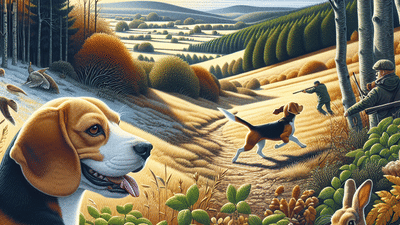
For centuries, Beagles have been prized hunting companions, initially bred for tracking rabbits and hare. Historically, Beagle hunting revolved around the "pack" – a group of dogs working collaboratively to drive game towards hunters. This traditional approach demanded stamina, a strong nose, and the ability to work in unison. However, modern Beagle hunting is evolving, with more emphasis on individual performance and specialized training techniques.
Beagles today fall into three camps: show, pet, and field. Show dogs are for looks, pets are for the couch, and hunting lines are for the brush. You can try to hunt a pet Beagle, but you're fighting uphill. A dog bred for the field has a motor that a show dog simply lacks. Know what's on the other end of your leash before you start whistle training.
The core principle of modern Beagle hunting training isn’t about creating a hunter, but rather unlocking the inherent instincts already present within the breed. Beagles are naturally driven by scent, and a good training program simply refines and directs that drive. We focus on enhancing their natural abilities, rather than trying to impose something foreign. It’s about partnership, building on what the Beagle already wants to do.

Building scent drive
A Beagle’s nose is its most valuable asset. They possess an extraordinary sense of smell, thanks to their large olfactory bulb and an estimated 220 million scent receptors – significantly more than humans. This allows them to detect and discriminate between a vast array of odors, even in challenging conditions. Understanding this biological advantage is the first step in effective scent work training.
Building "hunt drive’ is paramount. This isn’t simply about rewarding a correct scent identification; it"s about creating a genuine enthusiasm for the process. Start with simple games, hiding treats or favorite toys and encouraging the Beagle to find them using their nose. Positive reinforcement is key – praise, affection, and high-value rewards will motivate the Beagle to engage and repeat the desired behavior.
Once the Beagle demonstrates a reliable search pattern, introduce scent articles – a piece of rabbit fur, for instance. Begin by letting the Beagle sniff the article, then hide it in an easy-to-find location. As the Beagle becomes more proficient, increase the difficulty by hiding the scent article in more challenging spots and introducing distractions. "Proofing" – ensuring the Beagle works reliably in different environments, with varying levels of distraction – is a crucial step in solidifying their scent work skills. This might involve practicing in fields, woods, or even urban areas.
GPS and line shaping
Beyond basic scent work, modern tracking techniques leverage technology to enhance training and performance. GPS tracking collars have become increasingly popular, allowing hunters to monitor a Beagle’s range, speed, and direction in real-time. This data provides valuable insights into the Beagle’s hunting style – how far they typically range, their preferred terrain, and any areas where they tend to lose focus.
Interpreting this tracking data is an art in itself. A Beagle consistently ranging wide and fast might be a strong, independent tracker, while one that stays closer and checks back frequently might be more methodical. This information can inform your training, allowing you to tailor exercises to the Beagle’s individual strengths and weaknesses. Remember, though, that technology is a tool, not a replacement for skilled observation and training.
"Line shaping" is a powerful technique for refining tracking behaviors. This involves gradually guiding the Beagle towards the desired behavior through a series of small steps, rewarding each successive approximation. For example, if you want the Beagle to maintain a consistent tracking line, you might initially reward them for simply following a scent, then gradually require them to maintain a straighter line, and finally reward them only for a perfectly straight track. It's a patient process, but highly effective.
The best collars do more than show a dot on a map. Garmin and Tractive are the standard here. They let you set virtual boundaries and watch the dog's heart rate. I prefer the Garmin Alpha series because the refresh rate is faster when a dog is on a hot track.
UKC trial prep
For those interested in competitive hunting, the United Kennel Club (UKC) offers hunting Beagle trials – a standardized test of a Beagle’s hunting abilities. Preparing for a UKC trial requires a thorough understanding of the rules and scoring criteria, as outlined in the official UKC Hunting Beagle Rulebook (effective January 1, 2025). Knowing the rules isn’t just about avoiding penalties; it’s about strategically optimizing your Beagle’s performance.
Scoring in a UKC trial is based on several factors, including speed, endurance, voice, and drive. Judges evaluate how quickly and efficiently the Beagle tracks a rabbit, their ability to maintain a consistent pace, the quality of their bay (vocalization), and their overall enthusiasm for the hunt. Common mistakes to avoid include excessive circling, losing interest in the scent, and failing to respond to commands.
The trial typically involves multiple rounds, with the Beagle being released to track a rabbit scent. Training should focus on simulating these conditions – practicing tracking on varied terrain, working on recall and directional commands, and exposing the Beagle to distractions. Specifically, you'll want to work on maintaining a consistent pace and a clear, loud bay, as these are heavily weighted by judges. Understanding the relative importance of each component – as detailed in the Rulebook – is essential for targeted training.
- Speed: Judges look for how fast the dog covers ground without overrunning the scent.
- Endurance: The dog has to keep the same intensity in the fourth hour as it had in the first.
- Voice: The quality and consistency of the Beagle’s bay.
- Drive: The Beagle’s enthusiasm and determination to track the scent.
UKC Beagle Trial Category Comparison - Terrain, Rabbit Type & Judging Focus (Effective January 1, 2025)
| Trial Category | Typical Terrain | Rabbit Type | Judging Criteria Emphasis |
|---|---|---|---|
| 13-inch Beagle | Open fields, light cover, some wooded areas | Wild or released rabbits | Drive, speed, and consistent line following. Emphasis on vocalization and rabbit location. |
| 15-inch Beagle | More rugged terrain, thicker brush, and moderate woods | Wild or released rabbits | Endurance, ability to navigate challenging ground, and consistent rabbit drive. |
| 13-15 inch Beagle | Varied terrain, often a mix of open and wooded areas | Wild or released rabbits | Overall balance of speed, drive, and ability to handle varied conditions. Adaptability is key. |
| Color Trial Beagle | Typically open fields with moderate cover | Released rabbits | Quality of voice, consistent trailing, and overall performance as a rabbit dog, with color (vocalization) being a significant factor. |
| Straight Trail Beagle | Predetermined, marked trail | Released rabbits | Accuracy of line following, speed, and consistent trailing without deviation. Focus is on precision. |
| Weekend Beagle | Varied terrain, similar to 13-15 inch | Wild or released rabbits | Consistent performance over multiple drives, demonstrating stamina and hunting ability. |
Illustrative comparison based on the article research brief. Verify current pricing, limits, and product details in the official docs before relying on it.
Voice and communication
Beagles are a vocal breed, and their bay – a distinctive, drawn-out howl – is a key component of their hunting style. Learning to interpret a Beagle’s bay is crucial for effective communication. Different tones and patterns can indicate different things – a rapid, excited bay might signal a fresh scent, while a slower, more deliberate bay could indicate the rabbit is nearby. Experienced hunters become adept at reading these subtle cues.
While a Beagle’s bay is natural, you can also use voice commands to direct their behavior during a hunt. Simple commands like "stop,’ ‘check back,’ and ‘direction’ can be used to control the Beagle"s movements and ensure they stay within range. Consistency is paramount – use the same commands every time, and reward the Beagle for responding correctly.
There isn't a universally 'best' vocabulary for voice commands; what matters most is consistency. I've seen successful hunters use a variety of words, but they always pair those words with clear hand signals and positive reinforcement. The goal is to establish a clear and reliable communication system that allows you to guide the Beagle effectively.
Fixing common mistakes
Even with the best training, you’re likely to encounter some challenges along the way. False alerts – the Beagle indicating a scent that isn’t there – can be frustrating, but they’re often a sign of over-excitement. Reduce distractions and work on refining the Beagle’s scent discrimination skills. Getting distracted by other scents is another common issue; focus on "proofing" in varied environments.
If the Beagle refuses to track, it could be due to a lack of confidence or a negative experience. Go back to basics, building up their confidence with easy scent work exercises. Excessive running can be addressed by working on recall and directional commands, and ensuring the Beagle is getting enough mental and physical stimulation.
If a dog isn't clicking with a specific drill, move on. Some Beagles respond to food; others just want to hear you yell 'good boy.' Training is a long game of trial and error. Stick with it, and eventually, the dog will start making the right decisions on its own.
No comments yet. Be the first to share your thoughts!