


Start with a daily exercise routine
Beagles were bred to hunt in packs, meaning they possess a relentless drive to follow their nose and cover ground. Without a structured outlet for this energy, that curiosity turns into destructive behavior inside the house. A consistent daily exercise routine is not just about burning calories; it is about satisfying their instinctual need to work.
The American Kennel Club notes that Beagles are merry, bold, and full of life. This personality requires physical movement to stay balanced. A bored Beagle is a noisy, digging, and chewing Beagle. You must treat exercise as a non-negotiable part of their day, similar to feeding or grooming.
Follow this three-step sequence to build an effective daily routine that keeps your Beagle physically tired and mentally satisfied.
Choose the right food for weight control
Beagles are notorious for their food motivation, often treating every crumb they find as a personal inheritance. This drive, combined with a tendency to gain weight easily, makes dietary management the most critical aspect of their care. Without strict portion control, a healthy beagle can quickly transition into obesity, leading to joint stress, diabetes, and a shorter lifespan.
The foundation of weight management is not just what you feed, but how you measure it. Free-feeding, where a bowl is left out all day, is the fastest route to excess weight in this breed. Instead, establish a routine of measured meals. Use a standard measuring cup or a kitchen scale to ensure consistency. Treats should never exceed 10% of their daily caloric intake, meaning high-calorie training rewards must be offset by reducing their main meal portions.
When selecting a diet, consider the trade-offs between standard kibble and portion-controlled fresh or wet food options. While kibble is convenient, it often contains higher carbohydrate levels that can spike insulin. Fresh or wet foods typically have higher moisture content, which can help beagles feel fuller with fewer calories.
| Feature | Standard Kibble | Portion-Controlled Wet/Fresh | High-Fiber Dry Formula |
|---|---|---|---|
| Satiety | Moderate | High (moisture volume) | High (bulk expansion) |
| Calorie Density | High | Medium | Low to Medium |
| Convenience | High (free-feeding risk) | Low (requires prep) | Medium |
| Dental Health | Moderate (chewing action) | Low | Moderate |
| Cost | Low | High | Medium |
Manage shedding with weekly brushing
Beagles carry a dense double coat that sheds year-round, turning your living room into a fur minefield if left unchecked. This isn’t a high-maintenance show coat, but it does require consistent maintenance to keep hair off your clothes and furniture. Weekly brushing breaks the cycle of loose undercoat before it falls out naturally, keeping your home cleaner and your dog more comfortable.
The goal is to remove the dead hair trapped beneath the living topcoat. Without regular intervention, this dead hair mats against the skin, leading to hot spots and a dull, uneven appearance. A good grooming session also distributes natural skin oils, giving that classic beagle shine while keeping their skin healthy.
You need two main tools: a slicker brush for the topcoat and a shedding rake or undercoat rake for the dense layer underneath. The slicker brush has fine wire bristles that glide through the longer guard hairs without scratching the skin. The shedding rake has wider, blunt-tipped teeth designed to grab and lift the loose undercoat without pulling the live hair. Avoid metal combs for this task, as they often get stuck in the dense fur and frustrate your beagle.
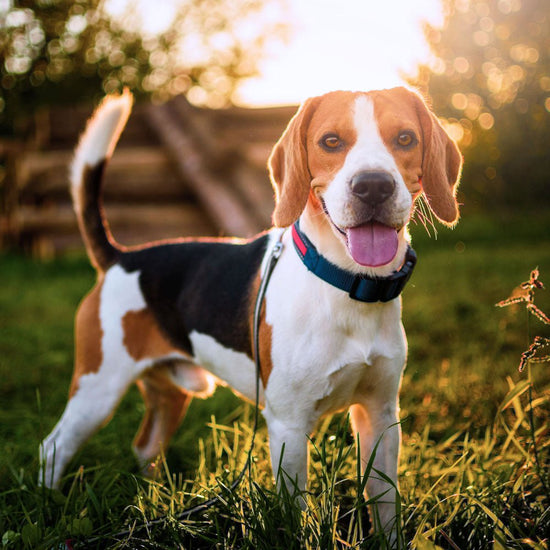
Start at the neck and work your way down the back, using short, gentle strokes that follow the natural lay of the coat. Beagles have a thick ruff around their neck and longer feathering on their ears, legs, and tail, so pay extra attention to these areas. Lift the leg or ear slightly to get to the skin, but never force the brush through a tangle. If you hit a knot, use your fingers to gently separate it before brushing to avoid pulling on the skin.

The back, shoulders, and base of the tail are the primary shedding zones for beagles. Spend extra time here with the shedding rake, using light pressure to lift the dead undercoat. You should see significant amounts of loose hair coming away with each pass. If your beagle has a particularly thick winter coat, you may need to brush more frequently during seasonal changes in early spring and late fall to manage the blowout.

Once you’ve removed the bulk of the loose hair, use a rubber grooming mitt or a damp rubber glove to go over the entire coat. This final step picks up the tiny hairs that the brushes missed and gives the coat a smooth, polished finish. It also serves as a quick massage, which most beagles enjoy, making grooming a bonding experience rather than a chore. Wipe the mitt clean with a towel after each session to see exactly how much hair you’ve removed.
Consistency is more effective than intensity. Ten minutes of gentle, regular brushing is far better than an hour of aggressive scrubbing once a month. This routine keeps your beagle’s coat healthy, reduces allergens in your home, and strengthens your bond with your dog.
Handle their stubborn personality traits
Beagles are bold dogs who pack a hefty punch of personality for their size. Their happy, go-lucky, adventurous demeanor makes them full of life and pizzazz, but it also means they have a strong independent streak. Training a beagle requires patience and consistency, as they are known for their stubbornness and tendency to follow their nose rather than their handler. To overcome this, you must use positive reinforcement to build a strong bond and motivate them to listen.
Start by making training sessions short and engaging. Beagles have short attention spans and can become bored quickly, so keep sessions under five minutes. Use high-value treats, such as small pieces of chicken or cheese, to keep their interest. When they respond to a command, reward them immediately. This positive reinforcement helps them associate obedience with good things, making them more likely to repeat the behavior. Avoid harsh corrections or yelling, as this can damage trust and make them even more resistant to training.
Consistency is key when dealing with a beagle’s independent nature. Everyone in the household should use the same commands and rules. If one person allows the dog to jump on the furniture while another forbids it, the beagle will become confused and may ignore commands altogether. Establish clear boundaries from the start and enforce them calmly but firmly. Over time, your beagle will learn that following your lead is the most rewarding path.
Secure your home against scent-driven escapes
Beagles are scent hounds bred to track rabbits and hare, which means their noses often override their training. When a beagle catches an intriguing smell, the instinct to follow it is powerful and immediate. This makes them notorious escape artists who can slip out of yards or open doors in seconds. Preparing your home requires more than just a fence; it demands a multi-layered approach to containment that accounts for their determination and agility.
Start with the perimeter. A standard six-foot fence is often insufficient because beagles are known to dig under or climb over barriers. If you have a yard, inspect the entire fence line for gaps, loose boards, or soft soil. You may need to add chicken wire along the bottom to prevent digging or install an inward-facing overhang at the top to stop climbing. Ensure the gate latches securely and cannot be nudged open by a curious nose or paw.
Indoors, the strategy shifts to managing entry points. Beagles are clever enough to figure out how to open simple door handles or push through slightly ajar windows. Install self-closing hinges on exterior doors and keep them latched at all times. Consider using baby gates or exercise pens to create safe zones when you are working or sleeping, preventing unsupervised access to exits. Never rely on a dog door for a beagle unless it is electronically keyed to their collar, as they will use it to wander off at the first sign of an interesting scent.
Supervision remains the most critical layer of security. Even with a secure home, a beagle should not be left alone in the yard without direct oversight. When walking, ensure your collar and harness fit snugly to prevent slipping out, and use a sturdy leash. The goal is to create an environment where the temptation to escape is met with physical barriers that hold firm, keeping your beagle safe and your home secure.
Beagle Care Checklist for New Owners
Caring for a pet beagle requires consistency. These dogs thrive on routine, so establishing clear daily and weekly habits helps manage their energy and health. Use this checklist to keep your beagle happy and healthy.
Daily Tasks
- Exercise: Provide at least 30–60 minutes of physical activity. Beagles are scent hounds with high energy; a simple walk isn't always enough. Engage their nose with scent games or a longer hike to prevent boredom.
- Feeding: Measure meals twice daily to prevent obesity, a common issue in the breed. Use high-quality dog food appropriate for their age and activity level.
- Grooming: Brush their short coat weekly to remove loose hair. Check ears daily for redness or odor, as beagles are prone to ear infections due to their floppy ears.
- Training: Practice recall commands. Beagles can be stubborn and easily distracted by scents, so short, positive training sessions are most effective.
Weekly Tasks
- Nail Trimming: Check nails weekly. If you hear them clicking on the floor, it’s time to trim them to prevent joint issues.
- Dental Care: Brush teeth several times a week to prevent periodontal disease, which is common in small to medium breeds.
- Health Check: Inspect skin for lumps, bumps, or parasites. Regularly check paws for debris or cuts, especially after outdoor adventures.
-
Walk or exercise for 30-60 minutes
-
Measure and serve two daily meals
-
Brush coat and check ears
-
Practice short training sessions
-
Brush teeth and check nails
Common Questions About Beagle Care
Beagles are energetic and curious dogs that require specific attention to their health and behavior. Understanding their unique needs helps prevent common issues like obesity or destructive habits.
Do Beagles Need a Lot of Exercise?
Yes. Beagles are scent hounds with high stamina. They need at least 60 minutes of daily activity, such as brisk walks or playtime in a fenced yard. Without enough exercise, they may become bored and develop destructive behaviors like chewing or digging.
Are Beagles Good Family Dogs?
Beagles are generally excellent family pets. The National Beagle Club of America notes they rank highly for family compatibility due to their friendly and social nature. They typically get along well with children and other pets if socialized early.
How Much Grooming Do Beagles Require?
Their short, dense coat is low-maintenance. Weekly brushing removes loose hair and distributes skin oils. Bathe only when necessary, as over-bathing can irritate their skin. Regularly check their long, floppy ears for signs of infection, as their ear shape traps moisture and debris.
No comments yet. Be the first to share your thoughts!